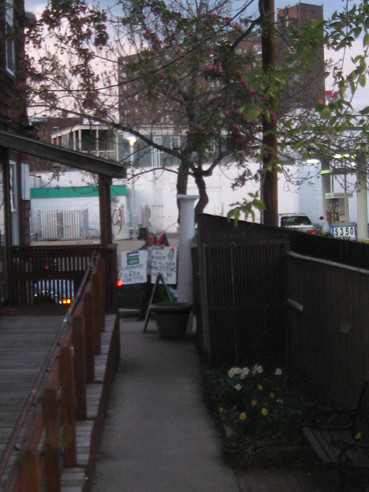
Showing posts with label total war. Show all posts

Thursday, January 6, 2011

Mark Twain and Censoring the "N-Word"

As many are already aware NewSouth, a Montgomery, Alabama based publisher, is releasing a new edition of Mark Tawin's Huckleberry Finn in which the "n-word" has been replaced with the less racially charged term, "slave." The NewSouth edition features an introduction by Auburn University professor, Alan Gribben:

Gribben became determined to offer an alternative for grade school classrooms and "general readers" that would allow them to appreciate and enjoy all the book has to offer. "For a single word to form a barrier, it seems such an unnecessary state of affairs," he said.

Gribben has no illusions about the new edition's potential for controversy. "I'm hoping that people will welcome this new option, but I suspect that textual purists will be horrified," he said. "Already, one professor told me that he is very disappointed that I was involved in this." Indeed, Twain scholar Thomas Wortham, at UCLA, compared Gribben to Thomas Bowdler (who published expurgated versions of Shakespeare for family reading), telling PW that "a book like Professor Gribben has imagined doesn't challenge children [and their teachers] to ask, ‘Why would a child like Huck use such reprehensible language?' "
Is this really about the offensiveness of the "n-word" or is this about making white southerners less squeamish about their history? (I do not have an answer, but having grown up south of the Mason-Dixon Line, I am very familiar with the disingenuous claims some southerners make about the causes of the Civil War.)

The whole point of Twain's use of the "n-word" was to portray how racism corrupted every element of southern life: even the likable protagonist and narrator, Huck, who befriends a runaway slave, uses the word. It is integral to the novel. People should be horrified by the racism of 19th century America. Hiding its ugliness hides both how far America has come as a nation, as well as hiding the ugliness of those who wish to pull America back to its past.

How does this refusal to look squarely at the role the word had in America's racist history make sense in an era where the "n-word" is so prevalent in pop-culture?

I am not an African-American. I do not have a visceral relationship with the "n-word." My opposition to censoring it, however, is no mere exercise in academic libertarianism. I am a Jew, and I am very conscious that there there is a large body of works important works in literature, theology, philosophy, history, and drama in which some of the most libelous things are said about my people. Keeping these texts available, and teaching them in context is how we grasp just how deep-seated and widespread antisemitism really is in western civilization. For instance, no matter how often nice liberal do-gooders try to pretend that Shakespeare had liberal attitudes towards Jews, we need to confront just how many times his heroes compare Shylock to the Devil (which I have lampooned in my own Arlecchino Am Ravenous):

The devil [Shylock] can cite Scripture for his purpose,-
An evil soul producing holy witness
Is like a villain with a smiling cheek,
a goodly apple rotten at the heart."
(Merchant of VeniceAct I, Scene iii 93-97)


...I should stay with the Jew my master, who (God bless the mark) is a kind of devil; and to run away from the Jew I should be ruled by the fiend, who (saving your reverence) is the devil himself: certainly the Jew is the very devil incarnation...
(Act II, Scene ii 22-26)


Here comes another of the tribe,-- a third cannot be match'd, unless the devil himself turn Jew.
((Act III, Scene i 70-71)


Of course, this is not the complete listing of anti-Semitic slurs in The Merchant of Venice. I don't want these slurs censored. In fact, I want them taught in their full ugliness. This talk of the devil is not a mere figure of speech. In late 16th century, Christians were taught in folklore, popular literature, songs, and sermons to associate Jews with the devil, Judaism with Satan worship, and Jewish messianic hopes with the imminent coming of the Antichrist (see Joshua Trachtenberg's The Devil And the Jews: The Medieval Conception of the Jew and Its Relation to Modern Anti-Semitism.) This was the audience to whom Shakespeare was catering.

To engage in further self-promotion, there's a passage in my own play, Total War in which two of the characters discuss this very whitewashing of history, and how it destroys the present context, and in this case, enable a fictitious Holocaust denier named Hadley:

JONAH: The standard western civilization textbook credits the Jews for monotheism, The Bible, rejecting Jesus, and being murdered by the Nazis nineteen centuries later.

ANDREA: But you’re sort of a minority in western civilization.

JONAH: What you call the Holocaust—the Shoah—is the culmination of that civilization, and yet every page that could have offered context has been torn out: leaving the genocide incomprehensible. Imagine each of Shakespeare’s plays with Acts II, III, and IV excised. Nineteen centuries ripped from the textbook. That Western civilization denies responsibility makes Hadley’s mission all the easier.


We should not pretend that Shakespeare's attitudes towards Jews were liberal, nor should we pretend that in the era that Mark Twain wrote about was a time where southern whites had liberal ideas about the skin-color of the people they enslaved. Twain understood the viciousness of the word and wanted to portray it and the society it represented. Wortham is correct to ask: ‘Why would a child like Huck use such reprehensible language?' but how can we ask that reading a bowdlerized edition?

Saturday, April 3, 2010

Belated Post-Reading Report

The March 28th reading was as rewarding as was stressful. As with the previous reading in October, I had had a few roles to recast, but I was also still dealing with the loss of my cat, Omi, who had been my companion for some 16 years. Grief has a way of putting one off schedule.

Then, as my plans finally came together with roles being cast only days before the reading, more chaos ensued. Stage manager Anika Hannibal-Colvin, who had been a valued assistant in the previous two readings fell ill, and Dan Schneider had an emergency to deal with on the day of the show. I was able to appoint Trudi Goodman to be stage manager since she she was reading a minor role that was only needed for a single scene, and she appointed me the understudy and so, I played the role of Jonah, especially strange since my plan was to sit in the back of the room and take notes.

The talk-back after the reading was particularly helpful. Both Thomas Garvey and Art Hennessey were in the audience and had a lot of useful observations as to how the dramatic potential could be better exploited (Art promised me some notes!) A recurring issue with the current draft as I would see with the feedback was that many dramatic turns near the end were left to inuendo, and not made explicit and therefore missed by the audience. In situations like that, it's the playwright, not the audience who is at fault.

As most of my actors were returnees, they seemed more comfortable than before in speaking candidly with me about both the performances and the script (both in terms of the current draft and the over all development)-- something which has continued in email conversations over the following couple of days in which I had superb dialogue with several cast members. I found myself in one exchange citing Adam Szymkowicz' recent interview of playwright Paul Mullin, when asked for advice to playwrights, Mullin said:

Understand the tradition you have joined. Never cede your place in the hierarchy. Directors did not come into existence until the 19th Century. Artistic directors not until the 20th. Only actors outrank you in seniority in the tradition. So treat them with respect. In fact, act on stage as often as you can...
Very good advice, I think.

The following day I received a letter in the post from a literary director, who after reading a ten-page sample was soliciting the full length script. Obviously, I can't name names since no commitment has been made, but sometimes the reward for hard work is simply to be encouraged to go back to work.

Friday, March 26, 2010

Cast for March 28th Staged Reading of "Total War"

Poster for Staged Reading of "Total War" 3/28/2010

Sunday, March 28th at 8pm at Outpost 186
186 1/2 Hampshire Street, Inman Square, Cambridge MA

A staged reading of Total War, a play by Ian Thal

Cast:

Jonah Gringer: Dan Schneider

Andrea Kunst: Savanah Shaughnessy

Edith Havilland: Kate Heffernan

Erica Weiss: Kendall Stewart

Father Aldobrandini:Martin Comack

Father John Bullock: Tom Sprague

Richard Doncaster: James Bocock

Duane McCormack: Matthew Zahnzinger

Donald Crincoli: Andrew Gerst

Campus Police Officer: Trudi Goodman


Stage Manager: Anika M. Colvin-Hannibal

Thursday, March 18, 2010

March 28th: A Staged Reading of Total War @ Outpost 186

Poster for Staged Reading of "Total War" 3/28/2010
Total War, a semi-finalist in the 2009 Dorothy Silver Playwriting Competition, is a five-act play set at a Catholic university where the student newspaper has published a Holocaust denial advertisement. Before faculty, students, and staff can begin the expected dialogue on free speech and religious pluralism, an anarchist-cell using the nom de guerre of “Total War” begins a campaign of guerrilla art attacks.

This will be the third draft of Total War to be presented at Cambridge’s Outpost 186. The first reading, in April of last year inspired a lone protester to picket the reading from the sidewalk.

The reading will feature the talents of local actors, including: Trudi Goodman, Kate Heffernan, Dan Schneider, Savanah Shaughnessy, Tom Sprague, Kendall Stewart and Matthew Zahnzinger. Anika M. Colvin-Hannibal will stage manage. Three more cast members are to be announced shortly.

Though a work of fiction, Total War was inspired by events I witnessed while attending graduate school. The play explores the history (and potential futures) of Jewish-Catholic relations, historical memory, and the conflict between grass-roots activism and institutional power. It is a story made timely after the recent scandal regarding Vatican’s recent lifting of the excommunication against the anti-Semitic Society of Saint Pius X and its Holocaust-denying Bishop, Richard Williamson.

Facebook users can RSVP here


View Larger Map

Saturday, March 6, 2010

Call for Actors: Staged Read of "Total War": March 28

Poster for Staged Reading of "Total War" 3/28/2010
Having taken a harsher view than much of the audience of the draft presented at the last staged reading of Total War, I did yet another rewrite. The new draft runs three pages shorter: Much of the craft of playwriting seems to be learning out to strip away the unessential. Most of the cast has elected to reprise their roles but three roles will be recast.

As this is simply a reading of a work in progress in front of a small audience, there will be no blocking. My concern is not so much the look or age of of the actors but their interest in the story and enthusiasm and insights into the characters. I will be available to answer any questions actors have about the characters prior to the reading. I will schedule read-throughs with any actors not comfortable with a cold reading.

To quote the press release:

Total War is a five-act play that addresses the legacy of anti-Semitism after the student newspaper at a Catholic university publishes a Holocaust denial advertisement. Before faculty, students, and staff can begin the expected dialogue on free speech and religious pluralism, an anarchist-cell using the nom de guerre of “Total War” begins a campaign of guerrilla art attacks.
If you are an actor and this sounds interesting, continue reading:

Dramatis Personae:

Father Aldobrandini: (Male, early 40s to early 50s.) A priest and university professor. Sees himself as a "traditionalist." Anti-modernist in orientation and argely opposed to the innovations of Vatican II, but his opposition stops just short of becoming a schismatic.

N.B. Martin Comack has been cast as Aldobrandini.

Richard Doncaster: (Male, late 30s to 50s.) Dean of students at a Catholic university. Though a political animal, he has presented modern liberal version of in loco parentis that aims to protect the identity and traditions of the school while also recognizing the increased pluralism of recent years.

Donald Crincoli: (Male, early 20s) Undergraduate who works on the student newspaper. An impulsive and twisted comic vulgarian.

I'm sorry that my budget does not allow for a stipend for the actors, but snacks and beverages will be provided. There will be a talk back session after the reading for the actors and audience to share their observations.

Interested? Drop me a note about the role that interests you. Resumes are helpful but not necessary.

Thursday, December 31, 2009

A Modest Proposal 2

I issued a challenge (admittedly, somewhat inspired by Thomas Garvey's provocations) to those critics talking about the lack of diversity in the theatre (especially with regards to the playwrights) to find under-appreciated, and relatively unknown plays and playwrights they deem worthy of production and advocating for them whether their advocacy appears in print, on the blogosphere, or even on the stage. In the ensuing discussion both here and elsewhere, (such as on Guy Yedwab's blog, CultureFuture) I elaborated by noting how common it is for music writers to publish lists of bands, musicians, or recordings, "you probably never heard, but should" and suggested that theatre writers should consider a similar format.

Isaac Butler, whom I concede that I unfairly criticized on several points, did acknowledge in the comments section to my proposal, that while he primarily directs the works of new playwrights who are not part of the MFA system, he hasn't done much to promote those writers much on his own blog-- though in the essentials, we are largely in agreement.

Yedwab (who has since coined the term, "the Ian Thal method of diversity") notes, of course, that this proposal is not enough:

[I]f my friend the playwright isn't being performed, I may not know the right people to pull connections with to get them performed -- and if they don't get performed, I can't send anyone to go see them.
Part of the equation is precisely where a social media platform like BushGreen comes in as a place where new scripts can be posted and read. However, there's also what playwrights can do themselves.

One thing I have done over the course of this past year is realize that Total War was going to be in limbo for a long time if I waited for other parties come in to help develop it, and decided to take a proactive stance, and do it myself: recruiting actors, and presenting readings, and then writing a new draft (in fact, I just booked my next reading for March 28th, so watch this blog for more details.) Any writer can do this.

But I should point out that while I am agitating working around an institutional theatre industry that many seem to believe is not working to produce great new plays, there are some who haven't waited for my call to arms. As August Schulenburg of the Flux Theatre Ensemble pointed out in comments section at CultureFuture, he had already compiled his list of Plays that Need Doing in NYC and noted that
...blogs like Clyde Fitch, Visible Soul, CultureBot, Just Shows To Go You, and Adam Szymkowicz are doing yeoman's work championing lesser known artists through great interview series.
Of course, Szymkowicz' 100 playwrights include a few well-known names, and he does pose the same interview questions to each playwright. I haven't been a regular reader of the other blogs.

In my own community, Whistler in the Dark, a member of the Small Theatre Alliance of Boston, initiated their Whistler Wednesdays which are specifically for presenting staged readings to new plays and playwrights, where I recently attended a reading of Vladimir Zelevinsky's A Brief History of the Soviet Union

I also have to state my appreciation to Thomas Garvey, who not only showed up at the first staged reading of Total War, offered an extensive critique during the talk-back, encouraged me to rewrite the play, but then promoted the second staged reading on Hub Review. That's precisely the sort of advocacy I'm advocating.

Interestingly enough, as I reflect on these efforts, both my own and those of other cultural workers, I realize that this is a theme central to Total War: if the dominant culture is not providing you with a venue; you have to create your own.

Friday, December 18, 2009

Total War on bushgreen

Despite what I now consider to have been an over-reaction to the suggestion that my plays might be made available online, the much deserved ribbing for said over-reaction by fellow blogger 99seats, I still had concerns as to how playwrights could be expected to make their work available online in such a manner that benefits them as well as the potential audience.

Though it may have appeared as if I had taken an ideological hardline with regards to sharing my work; I have decided to try out bushgreen, a new social networking platform for playwrights set up by London's Bush Theatre.

It's an experiment for me, but interested parties can find me here and perhaps read the latest draft of Total War here.

Tuesday, November 3, 2009

Nobody Sucks... Except That Guy

Last week, Don Hall, Chicago-based actor, director, theatre-observer, and activist (and well-known enough in the theatrical blogosphere that I trust someone will correct me if I left anything out) has been posting a series on the audition process on his blog An Angry White Guy in Chicago. Having recently been in the position of casting actors for Total War, and like Hall, not being "institutionalized (meaning I didn't go to college to learn how to do this work)" I found myself nodding in agreement with much of what Hall and some of his other readers had to say:

2. Take some time and find out what the director is looking for - I'm happier than shit to tell you what we're up to and what you can do to get "the edge."

3.
[...] I know within about fifteen seconds whether or not I can use you in my show - a good director knows in advance what he's looking for to some degree - and the only reason I let you get through that 2-minute monologue that somehow manages to be five minutes long is because you came all this way, there's no reason to be unnecessarily rude.

The bottom line is:

This means if you don't get called back, it isn't because you suck.

So if you did audition for the reading of Total War and didn't get the part: that's right: you didn't suck; you just weren't right for the role; you might have been right for a completely different role. In fact, since this was a staged reading, and I conducted my audtions in an informal, unorthodox manner, in a neighborhood coffeehouse (I simply didn't have the budget to rent out a space for auditions, though to be fair, I interviewed for my teaching gig with OpenAir Circus in the very same coffeehouse, and the informality seemed to encourage actors to volunteer their personal interest in the project) I might have liked you personally, even if I decided not to cast you.

* * *

As with every rule of social interaction (such as theatre-making) there is always a statistical outlier: in this case, it was someone who, despite having some talent, proceded to so alienate me during the audition that I would not even consider adjusting my sought-for preferences to accomodate his strengths. It all began when I received the following (yes, multiple) emails (Note that the name has been withheld for obvious reasons):

My voice has been described as deep, resonant, beautiful, and hilarious. I have been practicing for five years now and am able to express a wide range of personalities.

[...]

I feel that I would be perfect for the role of Duane McCormack. [...M]y writing has recieved significant praise from my honors professors so the role will come quite naturally to me.

Duane McCormack is a fictitious character, so the actor isn't actually expected to do any writing associated with the play. So while I appreciate that an actor might want to draw upon some aspect of their own life in order to relate to a character or to the themes of the play, this struck me as odd. Nonetheless, I sent a .pdf of the script along with a list of pages where Duane appears, concluding that this would be sufficient for the actor to judge for himself if the character is right for him and if so, provide hints as to how to approach the role.

So, in between meeting other actors at my table (which I rent by ordering espresso and bread pudding) our friend whose "voice has been described as deep, resonant, beautiful, and hilarious" shows up for his audition. His voice is indeed resonant and he has movie-star looks. Then he explains his interpretation into the character:

"Duane is a journalist; he's a truth-seeker."

This struck me as an odd misreading, so I suggested that "He is a student journalist but he's more defined by the attempt to keep his head above water while the comrades to which he's tethered are sinking than by any quest for truth."

The actor ignored my suggestion and read it his way. Not having a lot of actors auditioning for the role, I tried to consider if his interpretation added something I had not seen before (which had already occurred during the first staged reading.)

None of this would have been worth commenting upon until he started exhibiting the oddest behaviors. While I was flipping through the pages of my script to find the next bit of dialogue I wanted to hear him read, he put on his sunglasses, presented his profile and asked me if I saw his resemblance to Tom Cruise and Ashton Kutcher.

As I was conducting this audition in the oddest of places we were interupted when a young woman who had been a friend of a former roommate of mine, dropped by to say hello and asked about my cat. After the brief exchange of pleasantries and my explanation that I was conducting auditions, there was no exchange of email addresses, phone numbers, no words or gestures implying a hoped for future communication, which apparently the the actor missed, he slyly smiled and purred:

"A possible interest?"

He then launched into what must have been a rehearsed speech about how he was going to make my play great because he was going places, which, leaving aside the pathological narcissism, was simply insulting to the talents of the actors who had already volunteered to work on this project.

So, leaving aside his unsuitability for the role, I simply did not want to put my actors in a position of having to work with this guy.

So I sent the standard, diplomatic response:

It was a pleasure meeting you, but alas, I can't offer you the role of Duane. Thank you very much for taking the time to read with me.
Best,
Ian

To which he responded unexpectedly:

Hi Ian, (This is good, just read it)
Too bad, your production will suffer as a result of this unfathomably ignorant decision. Ha Ha Ha Ha Ha. Can you see that put to rhythm? I can, because I much more gifted than you will ever be in your life. Again, I offer my condolences to your woefully inadequate conclusion.
Yours Truly,
The Great And Noble
[Name withheld]

In the end, I found Matthew Zahnzinger, who besides nailing the role, had the added bonus of already being in rehearsal with Mikey DiLoreto on the Factory Theatre's production of Kid Simple, and that's always a nice coincidence.

Thursday, October 29, 2009

Time Question

In a recent thread on the Plays and Playwrights Yahoogroup a number of participants asked what it meant when it is written in the body of the play that it takes place in "the present" (presumingly when it was written) but that "present-day" references are often dated by the time of a given production.

Of course to my mind, even "the present" is a specific milieu; stories set in "the present" rapidly recede into historical fiction. Certainly, when I chose to set Total War in the 1990s, and not "the present" it meant that the characters would be making cultural and political references and using technologies of that era and not of "the present" I currently inhabit.

As a consequence, I made a small number production notes throughout the script in order to explain some of these technologies that are either no longer in use, or may be disappearing in the foreseeable future. The result was an instance of an unintended outburst of laughter when at the last staged reading, the audience heard stage manager, Anika M. Colvin-Hannibal read aloud:

[NOTE: Due to the time period in which this play is set, a "Dictionary" is a large bound book with a finite number of pages of paper, and not a potentially infinite digital hypertext.]

Sunday, October 18, 2009

Total War: Post-Reading Analysis

October 11, 2009 staged reading of "Total War"Cast from left to right: Lou Fuoco, Trudi Goodman, Tom Sprague, Anika Colvin-Hannibal, Savanah Shaughnessy, Daniel Schneider, Kendall Stewart, Mikey DiLoreto), Matthew Zahnzinger (sadly barely visible), and Kate Heffernan. Once again, I forget to take a lot of photographs.

And now for the post-reading analysis.

The event received blurbs from Art Hennessey's Mirror up to Nature as well as from Thomas Garvey's Hub Review. Garvey was good enough to point out that:

The topic is a fascinating one - the legacy of Catholic anti-Semitism on a very Boston-College-like campus that is, of course, not, not Boston College.


Garvey is correct: The student newspaper in the play does not even have the same name as any Boston College student publication and due to my utter lack of imagination, I did not even bother to name the school in the play. Though many theatre artists have an antagonistic relationship with critics, as we see, critics fulfill an important function clarifying such misunderstandings that the audience might have. The notion that a graduate of Boston College might write a play set at Boston College, while an easily made error, is clearly ludicrous when examined with a critical eye.

But on to the evening's main event:

Unlike last time, there was not an inarticulate Hamas supporter accosting actors and audience members as they approached (a friend reports that Rolde has also been absent from his usual activities loudly denying war-crimes in Darfur.)

However, we were not without minor crises of a more theatrical nature. John M. Costa was called away at last moment; and thankfully, though it amounted to unconventional casting, Trudi Goodman was on hand. Trudi was already reading the small role of the unnamed campus police officer, but was up for the role of Richard Doncaster, Dean of Students. The the result was plenty of unintentional comedy as actors either did or did not improvise around the changed gender of the actor! Trudi was great, by the way, and I really need to think about writing roles for her to play if I'm going to continue with this playwright thing.

As the audience filled in, and we waited for a couple of late arriving actors, I noticed a far larger turn out than the last reading. In fact, every seat in the room was filled and I even gave up my seat and spent most of the time perched on a coffee table in the back of the room.

I scribbled notes and corrections in the back as I read along with the actors. Though the play was only two pages shorter than the previous draft, the rewrites had made for a faster pace ("crisper" was the adjective used by some of the returning actors.)

I'm definitely much happier with this version, though I still feel that the pace seemed to slow down right in the middle-- not as much as with the previous draft-- but it's something I noticed. One audience member noted that including intermission, the run-time was two hours and twenty minutes and a that's too long in my mind for there to be a slow moment. The audience seemed divided as to whether the play was just a little too long or just the right length.

Another observation: I really need to put a pronunciation guide in the play. There are French, German, Hebrew, Latin, Polish, and Yiddish words and place names scattered throughout the script.

Most of the audience comments were positive though there were a few interesting questions:

One audience member wondered why at a Catholic school, why one of the key characters be so clearly identified as a lapsed-Protestant (perhaps not so unusual in the United States, but the speaker had spent some years living in Ireland) yet she also gave me kudos for properly using the term "deconstruction."

Another felt I should expand on my allusions to a certain Jewish prophet but also thought I should run the play by a Catholic theologian to make sure I am accurately representing doctrine. (Probably good advice, even though I did research the theology pretty carefully and did get an "A" in my Thomas Aquinas class in grad school.)

One of my young commedia students asked if I plan to write a sequel. No plans for writing a sequel and no intention of revisiting the setting, but there are certain themes and even a character or two I might want to revisit.

One audience member took such a dislike to Donald (played by Mikey DiLoreto) and attempted the argument that Donald was a supernumerary character. Mikey's job is safe though if for no other reason than some of the biggest laughs came from Donald's vulgar mouth, though the look on Mikey's face was priceless (sadly, I was taking notes at the time and so had pocketed my camera.)

Kate Heffernan (who played Edith) made this playwright very happy when she noted the revelation of the lack of a conspiracy which had been foreshadowed from the very first act-- despite the fact that Edith isn't in any of the scenes where this motif is brought up.

There were a number of other interesting side conversations between the actors and audience about the themes that the play explored but not necessarily about the the writing itself-- but interesting enough for me to ponder as as I consider rewrites.

Afterwards, people grabbed a few more bites of cheese and chocolate and cleared out. I was surprised that everyone shied away from the hummus.

Nika and I met several days later to go over the reading (it's useful to have the stage manager's opinions since she was more proximate to the actors during the reading than I) and we were able to unravel what differences were the result of a rewrites since the previous reading and which differences were the result of a change of certain cast members. We agreed that the cutting away of extraneous material brought certain characters into sharper focus

I still need to tighten Act III.

Thursday, October 8, 2009

Binding Scripts for the Reading

While roughly half of the actors participating in this weekend's staged reading Total War are happy to print up their own copy of the script if I simply send them the .pdf, others have busier lives-- and so I have been spending evenings binding scripts.

My laser printer, which I acquired last year at a yard sale for $10 has proved invaluable for my career as a playwright, and despite the occasional paper-jam, does a fairly good job. Afterwards I sit on the living-room floor with my three-hole-punch and make a small amount of confetti, if one sees this as a celebratory part of the creative process, or chad, if one looks at this with a more pragmatic eye.

The next stage is probably the most time consuming and the most fun: Knotting the pages together into a book. Using three knots, two in the two left hand corners, top and bottom, and one in the middle of the left margin, I bind ten or eleven sheets together at a time, then bind the next ten or eleven sheets until a script is done.

Then I slide each copy into my milk-chocolate brown accordion-folder, ready for transport!

(Of course, were I a famous playwright, I would have an intern to do this sort of thing.)

In fact, if you look at the flyer I made for the reading, you will notice that the photograph, which shows a much earlier draft, shows an early permutation of my script binding method:

And if you look closely enough, you might even see the names of characters that do not appear in the current draft:

Saturday, October 3, 2009

Yes, I Over-Reacted

My last post, "Free Play Free-For-All", resulted in more than the usual amount of discussion, not just in this blog's comment section, but on the 99Seats blog and on the Dramatists Yahoogroup. And while it is always a joy to spark debate, it became very clear to me that despite the legitimacy of some of the concerns I expressed, was none-the-less over-the-top; that my reaction was out of proportion to what was essentially a faux-pas.

Essentially, the story begins when a friend posted a link to an event announcement for a staged reading of Total War to his Facebook page. This results in a discussion thread between a third party and myself:

[Name Withheld] sounds like a fine play to me, i'm searching the net for its script to read

Ian Thal I'm the author and the script shouldn't posted on the net, at least not in the form that will be presented on October 11th.

[Name Withheld] thank you! i was unable to find it, but will continue to this winter, just in case you post it somewhere. the synopsis is quite interesting and itself well-written.

Ian Thal [Name Withheld], I'm not planning on posting it to an open forum at any point in the foreseeable future. There are a lot of issues involved including protecting my intellectual property rights.

[Name Withheld] of course. i'm sorry to have forgotten that issue. best of luck on your opening night.


At this point in time I was still having the hardest time finding an actor for one of the supporting roles for the reading and enduring some of the stresses of being an artist in this economy. So a simple, unintended faux-pas drew an exaggerated response.

99Seats, though misinterpreted me on a number of counts, gave me a well-earned mocking for my excessiveness. (We have since cleared up most areas of misunderstanding; any other issues of disagreement to be of a friendly nature.)

What set me off was the presumption that my work should be found freely available on-line when clearly, since the event was announced as a staged-reading, it was still a work-in-progress, and then by the follow-up in which my interlocutor, instead of making an attempting to start a dialogue with me and asking for a copy, simply stated the intention to keep looking until the play was found somewhere on-line. That my rights as an author still engaged in development were an afterthought added to my feelings of being treated discourteously.

My reaction to what was most certainly an unintended discourtesy was simply overboard. A far more appropriate response would have been along the lines of what I was to later say in the comments section of my previous post:

If Tony Kushner were staging a reading of his next great play, most would understand that the text of this work-in-progress [would] unlikely to be on the web, at least not with Kushner's approval. However, Kushner is famous (and well he deserves to be) so everyone expects to pay for his work, while I am not famous, so my work is expected to be freely available.


Just to clarify: I have distributed various drafts of Total War to actors, some of whom either were or will be readers for my staged readings, were curious about either participating, or, even were unavailable yet still curious. I've distributed copies to theatres, conferences, workshops, and competitions that were seeking submissions.

It's not that I am opposed to sharing my work online; it's a matter that my thoughts as to when, with whom, and by what methods are still open to my own deliberation and debate with others. This isn't an ideological stance (though it may have come across as one, earlier) but rather a stage in the development of this particular piece.

Tuesday, September 29, 2009

Free Play Free-For-All

N.B.: 10/3/2009: Since writing this piece, I have decided that it is a bit of an over-reaction, but I keep it here for your entertainment.

As an artist who cannot consistently rely on large institutions to promote his events, I make use of on social media, so without hesitation, I did what I and many other artists and presenters of my acquaintance do: I posted an event listing for the staged reading Total War to Facebook.

As one would hope when one does such a thing, actors and attendees start to invite friends or repost the event listing.

Mark Jaquith, who blogged about some of my other work was kind enough to post my listing to his Facebook account. Which interestingly enough, elicited the following response:

[Name Withheld] sounds like a fine play to me, i'm searching the net for its script to read


Which just struck me as an odd thing for someone to write when clearly the event is a staged reading of a work-in-progress, and anyway, still under copyright. I had posted an earlier draft to a seemingly now defunct website that was designed with the purpose of facilitating contact between playwrights and producers, so I had made the work digitally available in the past for a limited audience,

I responded:

Ian Thal I'm the author and the script shouldn't posted on the net, at least not in the form that will be presented on October 11th.

[Name Withheld] thank you! i was unable to find it, but will continue to this winter, just in case you post it somewhere. the synopsis is quite interesting and itself well-written.


In other words, "I'm looking for a free version of your work-in-progress." This, irked me as I am also a writer, I don't take kindly to people nicking my work. More importantly, I have had my work nicked (blog entries reposted elsewhere without attribution, book reviews quoted or reprinted without attribution or permission, et cetera) but this was the first time somebody had the chutzpah to tell me, "I would like to nick your work, because it sounds really interesting!" This is despite the fact that I am already making the effort to put my work out for a public viewing.

Now, I admit to reading free digital versions of copyrighted works, but due to my sensitivity to the issue, I only do so when the work has been made freely available by author or publisher, or when work for which I would be willing to pay due to its historical importance is no longer commercially available due to ownership disputes between author and publisher, or corporate censorship by the publisher.

I'll also admit that I can't afford to pay to see every play I want to see, so I volunteer as an usher, win promotional tickets, get tickets in exchange for teaching workshops to supplement my meager theatre-going budget-- so even most of my "freebies" are really barters for my service to the community-- and even then, I do not get to see everything I want. I'm not sneaking in through the fire exit, or asking somebody to sneak a video camera in.

Ian Thal [Name Withheld], I'm not planning on posting it to an open forum at any point in the foreseeable future. There are a lot of issues involved including protecting my intellectual property rights.

[Name Withheld] of course. i'm sorry to have forgotten that issue. best of luck on your opening night.


I'm not even sure what conclusions to draw from this exchange. Is this simply how technology has changed how the work of artists is viewed, or is this just the latest permutation of ways in which the labor of artists is devalued by the culture that still consumes product of their labors?

What I really don't understand is the source of hubris to actually tell the artist, "I intend to nick your work the moment I see the opportunity."

Yet, I am of two minds here, Shelly MacAskill's video of my performance of "The Marmalope" was to my benefit. Essentially, it could be called a "bootleg" but at the same time, it shows a performance that requires a prerequisite amount of training to replicate and serves as an advertisement of my skills as a mime and physical comedian, so my first inclination when I met MacAskill socially was to thank her for posting the video. Does the qualitative difference between full text and documentary video overrule the similarities?

Saturday, September 26, 2009

October 11th: A Staged Reading of Total War @ Outpost 186


Total War, a semi-finalist in the 2009 Dorothy Silver Playwriting Competition, is a five-act play set at a Catholic university where the student newspaper has published a Holocaust denial advertisement. Before faculty, students, and staff can begin the expected dialogue on free speech and religious pluralism, an anarchist-cell using the nom de guerre of “Total War” begins a campaign of guerrilla art attacks.

Last time I staged a reading of Total War, at Cambridge’s Outpost 186, the event was picketed by a lone protester with several signs and placards who accosted both audience and actors as they arrived.

The reading will feature the talents of local actors, including: John M. Costa, Mikey DiLoreto, Lou Fuoco, Trudi Goodman, Kate Heffernan, Dan Schneider, Savanah Shaughnessy, Tom Sprague, Kendall Stewart and Matthew Zahnzinger. Anika M. Colvin-Hannibal will stage manage.

Though a work of fiction, Total War was inspired by events I witnessed while attending graduate school. The play explores the history (and potential futures) of Jewish-Catholic relations, historical memory, and the conflict between grass-roots activism and institutional power. It is a story made timely after the recent scandal regarding Vatican’s recent lifting of the excommunication against the anti-Semitic Society of Saint Pius X and its Holocaust-denying Bishop, Richard Williamson.

Facebook users can RSVP here


View Larger Map

Wednesday, September 23, 2009

Cast for October 11th Staged Reading of "Total War"

Sunday, October 11th at 8pm at Outpost 186
186 1/2 Hampshire Street, Inman Square, Cambridge MA

A staged reading of Total War, a play by Ian Thal

Cast:

Jonah Gringer: Dan Schneider

Andrea Kunst: Savanah Shaughnessy

Edith Havilland: Kate Heffernan

Erica Weiss: Kendall Stewart

Father Aldobrandini: Lou Fuoco

Father John Bullock: Tom Sprague

Richard Doncaster: John M. Costa

Duane McCormack: Matthew Zahnzinger

Donald Crincoli: Mikey DiLoreto

Campus Police Officer: Trudi Goodman


Stage Manager: Anika M. Colvin-Hannibal


N.B. As of September 30, Matthew Zahnzinger has been cast as Duane McCormack.

Monday, August 31, 2009

Call for Actors: Staged Reading of "Total War": October 11

N.B.: As of September 1st, Trudi Goodman will be playing the Officer.

N.B.: As of September 20th, Kendall Stewart will be playing the role of Erica Weiss. The roles of Jonah and Duane are still open.

N.B.: As of September 22nd, Dan Schneider will be playing the role of Jonah Gringer. The role of Duane is still open.

N.B.: As of September 30th, Matthew Zahnzinger will be playing the role of Duane McCormack.

Having found the previous staged reading a rewarding experience both in terms of working with the actors, and degree to which it gave direction to the rewriting process, I will present a reading of the latest draft of Total War. Once again, the reading will be on Sunday, October 11, at 8pm at Outpost 186 in Cambridge.

Most of the cast has elected to reprise their roles but I will be be recasting the some of the roles. As this is simply a reading of a work in progress in front of a small audience, there will be no blocking. My concern is not so much the look or age of of the actors but their interest in the story and enthusiasm and insights into the characters. I will be available to answer any questions actors have about the characters prior to the reading. I will schedule read-throughs with any actors not comfortable with a cold reading.

To quote the press release:

Total War is a five-act play set at a Catholic university where the student newspaper has published a Holocaust denial advertisement. While faculty and staff attempt to show solidarity with the small Jewish community on campus, an anarchist-cell using the nom de guerre of “Total War” begins a campaign of guerrilla art attacks before a predictable dialogue on free speech and religious pluralism can begin.


If you are an actor and this sounds interesting, continue reading:

Dramatis Personae:

Jonah Gringer: Male, mid-to-late 20s. Jewish. Graduate student in philosophy at a Catholic university. His views and actions tend towards absurdism and non-violent anarchism

Erica Weiss: Female, early 20s. President of Jewish Student Association, at a Catholic university. Senior in political science. Were it not for the anarchists showing up in Act II, she would be the protagonist of this play.

Duane McCormack: Male, early 20s. Editor-in-Chief of The Dustbowl Pulpit, the student newspaper. He attempts to be a responsible student journalist but is perhaps the only person on his staff to realize how ill-equipped they are to cover the situation his paper has helped create.

Campus Police Officer: Appears in only one scene; would be doubled in an actual production. Professional, but with a sardonic sense of humor.

I'm sorry that my budget does not allow for a stipend for the actors, but snacks and beverages will be provided. There will be a talk back session after the reading for the actors and audience to share their observations.

Interested? Drop me a note about the role that interests you. Resumes are helpful but not necessary.

Monday, July 20, 2009

After the Staged Reading: Rewriting "Total War"


A couple of weeks ago, I completed the latest set of rewrites to Total War. It was an intense bit of work that began with a trimming of both the longer passages and more philosophically dense passages and an extension of the more character driven drama, trying to expand upon some of the ironies that Thomas Garvey noted during the talk-back session at the end of the April 26th staged reading.

Another important structural element was seeing that each of the five acts had their own themes, and that an epistemological question dealt with in the first act did not need to be reintroduced in the fourth act except in the most oblique manner.

Trudi Goodman, who had also been in the audience, had some interesting notes about the derivation of the Yiddish slur, "shiksa" that also managed to find its way into the rewrite.

Mikey DiLoreto's reading of the character of Donald was somewhat unexpected and caused me to rethink the character to a point where I recited the mantra of "Donald is the type of guy who..." whenever I worked on a scene in which he appeared.

The final stage of the rewrite was helped along by the sudden arrival of summer weather in the first week of July, during which I could spend some time on my back porch along with my modest garden of basil and mint plants with a copy of the script, a pen, and a large mug of coffee, proofreading, and cutting unnecessary repetitions. Every twenty or thirty pages or so, I would get out of the sun, and type up those changes.

The result is a draft with a stronger ending (oddly enough, revolving around the same three characters), more character-based drama, and a shorter page count.

The next staged reading is booked for the evening of October 11, once again at Outpost 186, but I'm going to wait a few weeks before I start putting a cast together. Afterwards, I will see what else I need to change.

Thursday, April 30, 2009

The Staged Reading and What I Learned


Cast of the April 26th reading of Total War at Outpost 186. Note that Anthony DiBartolomeo has been replaced by Stuart G. Levy. The author regrets not taking more photographs.


Despite whatever the lone protester outside of Outpost 186 during the staged reading of Total War was attempting to do, the main event was inside.

Over the previous few days of read-throughs with some of the actors, and conversations with my stage manager, Anika Hannibal-Colvin, certain problems with the current draft became evident. Corrections were often made on the fly and and some notes regarding the next draft were written down. Some of these issues were reaffirmed when I listened to the staged reading with script in one hand and a pen in the other.

Before I engage in some-lengthy self critique, I should note that on the positive end, most of the comedic banter seemed to work, the more poetic florishes were effective, the characters came across as fleshed out, and the audience seemed engaged by the subject matter and storyline, but I had not produced the reading for the purpose of self-congratulation or solicitation of allocades. The purpose was to identify the flaws, and to give direction to the next rewrite.

The Reading:

As I listened, I noted that the second scene of the first act, which had been effective as a piece of written text and would likely work well if staged by a competent director, is dreadfully boring as a purely spoken text. While there are a few good dramatic moments in the scene, but it's basically an info-dump. I still think the play needs the scene, but the scene needs trimming.

The repetitions through the play were not nearly as bad as I feared during the read-throughs, but "not nearly as bad" does not mean "great."

The last scene was somewhat anticlimactic (as I had feared,) and while I am certain a good director could stage it so that it would be more dramatically satisfying, it seemed to me that the director's job is not to make up for the authors' short-comings.

The Talk Back:

Nika took charge during the talk-back, allowing me to take a minimal role in the conversation that followed between the audience and actors. I tried to take whatever notes I could, since the goal was neither to explain nor defend the work, but to listen to others.

Andrew Hicks, amongst the actors, was the most forthright in his criticism of over-reliance on "dialectics" in certain scenes. If I understand correctly that he means philosophical back and forth about epistemology that strays away from the more concrete issues explored by the rest of the play. Jonah, the character Andrew portrayed, certainly should be concerned with epistemology, but for him to go on at length about epistemology without reference to Jewish-Catholic relations or Holocaust denial (the two historical issues the play dwells upon) amounts to a distraction and fails to convey how intertwined Jonah's emotional and intellectual life are. Some of the audience (again, otherwise engaged by other aspects of the story) stated that they felt somewhat alienated in those sections.

A number of other notes from the audience concerned simply placement of scenes, or emotional content of specific scenes. One phenomenon I noticed more than once was that when members of the audience (even in one case, a veteran actor) questioned the emotional tone of certain scenes or relationships between the characters, the actors playing those scenes were quick to defend the emotional aspect. This, I suppose, might a consequence of the very different ways the actors and audience experience the characters.

While some would balk at inviting a critic to attend the reading of a work-in-progress, Thomas Garvey's presence was invaluable during the talk-back. Besides complementing my use of several layers of irony, and his exploration of the less-than-noble qualities of the protagonist, he keenly identified the central conflict arc, and how it failed to advance beyond a certain point, though also pointing out that to fully develop this arc would require a substantial rewrite.

Observations:

The play is not hurt by the research I conducted, but there is such a thing as putting too much of my research into the dialogue. The characters who are motivated by ideology (whether political or theological) were made authentic by the research, but if I made an error, it is that I felt the need to present a logical proof of their authenticity.

Scenes are weighed down by dialectics about historiography, truth in the post-modern era and theology, and a few audience members reported not being able to follow the discussion even if they were engaged by the rest of the story. It's not just a matter of shortening these passages: the lines from these scenes that use more metaphorical or allegorical language are more successful: they convey the emotion and they give the actors and audience more with which to work. After all, Plato's dialogues are rarely performed on stage, and to the extent anyone outside the world of Plato scholarship remembers any part of his ouvre, it's because of a notable allegory or sensual subject matter. Those who enjoy dialectics should be able to extrapolate the argument from the poetry, but for the rest, give them poetry.

I was working with a smart group of actors, but there were several points where I let them down at times by inserting jokes that not only required specialized knowledge to understand (and therefore deliver) but they were further obscured by the fact that the script did not even provide a hint to the actor as to where the could look up the concept being lampooned. (Even from my perspective, they were not the funniest jokes in the play.) Telling the actors (as I did to Andrew Hicks and Tom Sprague during the read-throughs) that "deliver anything that looks like a joke as a joke" simply isn't giving the actors a chance to inhabit the characters.

And now, to begin the rewriting...

Monday, April 27, 2009

Total War Picketed in Cambridge!

Before I recap the staged reading of Total War, a process that has helped me immensely as a playwright attempting to develop his first full-length play, I have have to share with you the performance that was going on outside of the venue.

The reading had attracted a protestor. Total War is primarily about Jewish-Catholic relations, and secondarily about Holocaust denial, it doesn't portray student journalists in a very kindly manner. So one might imagine that a reading, which has been mostly promoted through the blogosphere and social networking sites, were it to be protested at all, might be protested by, say, a traditionalist Catholic group, but instead we have:


Close-up. Slight photo manipulation to make signs more legible. Note Hamas-flag and rejection of a two-state solution to Israeli-Palestinian conflict on signs.

This is not the first time I have encountered this man, who, as one can see, practically wraps himself in the Palestinian flag. He first came to my attention when he and a group identified as Boston Anti-Zionist Action (BAZA - website hasn't been updated in over a year) were heckling a bill of genocide survivors who had come to speak at a rally in solidarity with the people of Darfur. I later discovered that his name was David Rolde, former Party Secretary of the Green-Rainbow Party of Massachusetts, and at least as of October 10, 2007, was still listed as serving on the GRP State Committee. (On October 29, 2007, Nathanael Fortune, Co-Chair of the GRP informed me, that Rolde had resigned from the party.)

The oddest thing about Rolde's "protest" was that Total War is not about any aspect of the Middle East conflict: it's about Jews and Catholics. However, this did not stop Rolde from shouting "Jewish murderers!" as nauseum in a whiny voice while partially blocking the footpath between Outpost 186 and the sidewalk. I suppose he takes his street performance anywhere there might be an event that could be termed "pro-Jewish."

Periodically as the actors were preparing, I would step out onto the patio of Outpost, unable to restrain a chuckle as I could not make any sense of why he was protesting Total War. Eventually, I called out to him something along the lines of:

"Excuse me, do you know what tonight's play is about?"

To which Rolde responded, "It's a play about Holocaust denial but you're denying the genocide in Palestine! You're a Holocaust denier!"

"I'm not sure you understand the meaning of the word 'genocide.'" said I, only to take on a more condescending tone, "You could, of course, use the word to mean anything you please just because you know is has emotional resonance, but that doesn't mean you know what you're talking about. Would you like to come inside and see the play and maybe learn something?"

Rolde scuffled a few feet down the sidewalk so that my view was largely occluded by the fence. He quieted down for a few minutes. I have no idea of he scared any potential audience members away, though he apparently had a verbal altercation with at least one late arrival.

Next: The reading itself, and what I learned.

Friday, April 17, 2009

April 26th: A Staged Reading of "Total War" @ Outpost 186


Cambridge, Massachusetts, Sunday, April 26th, 8pm:

Ian Thal hosts a staged reading of his play, Total War, at Outpost 186, located at 186 1/2 Hampshire Street, Cambridge MA.

Total War was recently named a semi-finalist in the 2009 Dorothy Silver Playwriting Competition. The reading is an opportunity both for the author to develop the play through listening and for an audience to experience a stripped-down version of a work-in-progress. A talk-back will follow the reading.

The reading will feature the talents of local actors including: Dale Appel, Anika M. Colvin-Hannibal, John M. Costa, Anthony DiBartolomeo, Mikey DiLoreto, Lou Fuoco, Kate Heffernan, Andrew Hicks, Lesley Anne Moreau, Krystle Spoon, and Tom Sprague.

Total War is a five-act play set at a Catholic university where the student newspaper has published a Holocaust denial advertisement. While faculty and staff attempt to show solidarity with the small Jewish community on campus, an anarchist-cell using the nom de guerre of “Total War” begins a campaign of guerrilla art attacks before a predictable dialogue on free speech and religious pluralism can begin.

Though a work of fiction, Total War was inspired by events Thal witnessed while attending graduate school, exploring the history (and potential futures) of Jewish-Catholic relations, historical memory, and the conflict between grass-roots activism and institutional power. It is a story made timely after the scandal surrounding Vatican’s recent lifting of the excommunication of the anti-Semitic Society of Saint Pius X and its Holocaust-denying Bishop, Richard Williamson.

Facebook users can RSVP here


View Larger Map