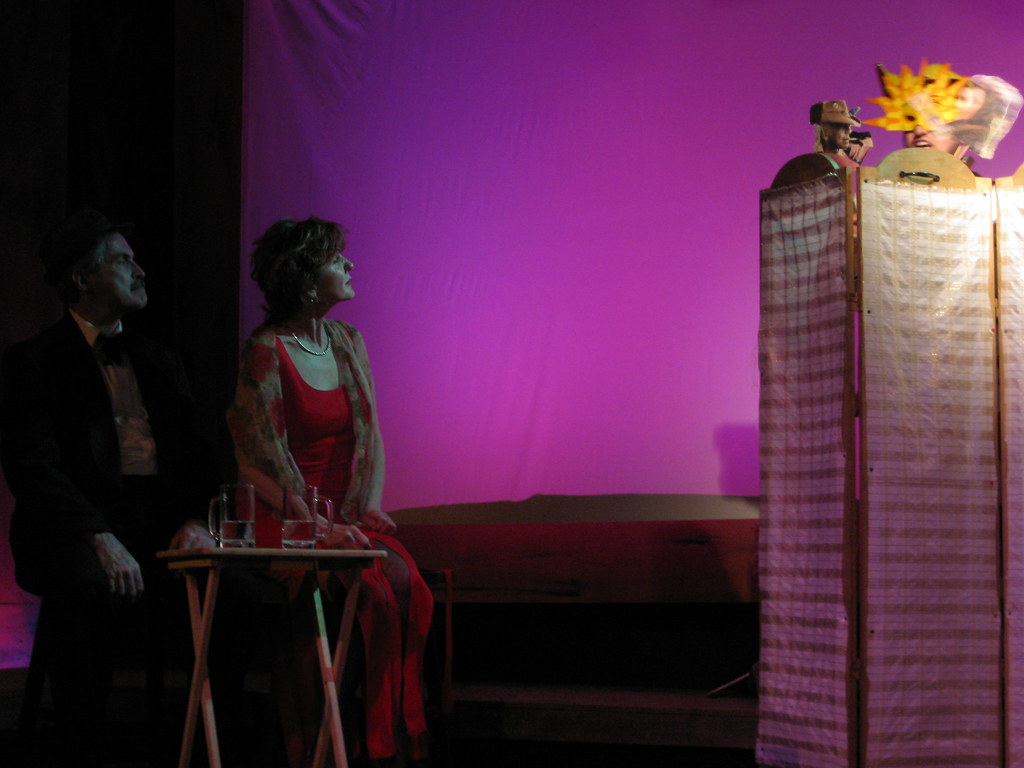
Tuesday, June 21st, 2011, I attended the eleventh annual staged readingand symposium on Shakespeare and the Law jointly presented by the Boston Chapter of the Federalist Society and the Commonwealth Shakespeare Company. I did not know what to expect : last year's reading and discussion of Henry V had been little more than alove-fest for John Yoo and his legal arguments on behalf of George W. Bush's more controversial war-time decisions that inadvertently exposed Professor Yoo's intellectual poverty. However, since the play under consideration was The Merchant of Venice, a play that has been in my thoughts in recent years, I felt the need to attend. By coincidence, the Cutler Majestic Theatre, which hosted the event was the very same room in which I had seen Darko Tresnjak's Theatre for a New Audience production of Merchant of Venice
As with the previous year's presentation, the affair was a highly truncated reading by non-actors (in this case a cast made entirely of judges) that clocked in at about an hour, followed by a panel discussion on the legal themes. It was a pleasant surprise that this year featured as more sober, less partisan discussion than last.
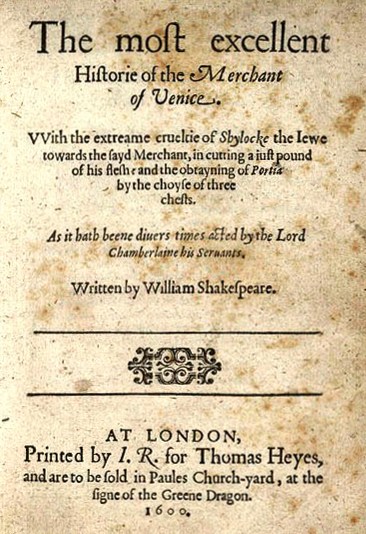
Daniel J. Kelly, Chairman for the Boston Chapter of the Federalist Society, in his role as moderator, established the themes under consideration as "contract, equity, justice, and judging" as such, the scenes that were featured in the reading were those that focussed on the three types of contracts that appear in the play and their related trials: infamous bond of the pound of flesh between Shylock and Antonio and Act IV's trial scene, the will that stipulates the "obtayning of Portia by the choyƒe of three cheƒts" and the oaths regarding the wedding rings and comic early morning trial in Belmont. Helen M. Whall, professor of English at College of the Holy Cross, opened the after-play discussion, offering some of the scholarly insights that were lacking in last year's far more partisan presentation.
I am unable to account for all of the speakers and their insights but I will sketch out some notable comments as well as some general points of consensus.
Whall noted that prior to the incorporation of the first professional theatre company in England in 1576, the primary theatrical experience had been that of morality plays (a genre satirized in Launcelot Gobbo's monologue cut in this version) and thus Shakespeare's audience were accustomed to having such concepts of law, mercy, and justice allegorically dramatized on the stage. Most importantly, Whall underlined that from the Christian perspective of the 1590s, the forced conversion of Shylock from Judaism to Christianity that so upsets the sensibilities of those of us who live in countries that guarantee religious liberty would be seen as a favor (indeed, an act of "mercy.") As this theological perspective is central to my thoughts regarding the play, I will return to it later.
Judge Andrew Grainger of the Massachusetts Appeals Court, who had played the role of Shylock in the reading, was very quick to point out that despite the literary worth of The Merchant of Venice that not only was there a problem of overlaying our 21st century legal sensibilities upon a 16th century play that there were also limitations to how a literary and dramatic presentation can be seen as representing the operations of the law. This was a theme that several of the judges brought up (in fact, Gabrielle Wolohojia, also of the Appeals Court, who played Portia, expressed a strong distaste for Portia's legal practice): Portia's courtroom behavior would at the very least allow Shylock the right of appeal in a modern, western court. Besides impersonating a judge and entering the court under false credentials (not mentioned by the panelists) she has a number of conflicts of interest: the defaulted loan was taken on her husband's behalf, combined with her money being offered in settlement presents her with both a personal and financial stake in the outcome of the trial. Portia also, on a whim, changes roles from judge, to defense attorney, to prosecutor and back, while simultaneously turning what is essentially a civil trial of Antonio into a criminal trial of Shylock.
Daniel Kelly would point out that Portia reads all sorts of conditions into the bond that were not already in the bond in such a way that undercuts the rule of law (indeed, it is precisely by her reading in of conditions that she flips the trial of Antonio into a trial of Shylock.) Of course, several of the Judges present pointed out that whether Shylock was willing to accept a settlement or not, the conditions of his bond (the forfeit of the pound of flesh) were legally absurd and "void as against public policy"-- i.e. the contract would be dismissed because it required an illegal act for its fulfillment. Relying on Jean Favier's history, Gold & Spices: The Rice of Commerce In the Middle Ages it appears that courts did have the power to dismiss bonds of usury if it was determined that the contract placed too onerous a burden upon the debtor (such as something that would be otherwise illegal)-- in which case, the usurer might be subject to a small fine (but never one so harsh to keep the usurer from returning to the business) so despite even Antonio's claims that
The duke cannot deny the course of law:--the "course of law" did then, as it does now, provide an escape from the bond. It is precisely this principle of "void as against public policy" that allowed my parents to purchase the house in which I grew up despite a deed specifically barring "Jews and Negroes" from residing within; such restrictive covenants had been rendered unenforceable by Shelley v. Kraemmer (1948) even if the deeds continue to exist.
For the commodity that strangers have
With us in Venice, if it be denied,
Will much impeach the justice of the state,
Since that the trade and profit of the city
Consisteth of all nations…(Act III, Scene 3, 26-31)
The point being that while Portia demands Shylock be merciful, rather than doing to merciful thing which would be voiding the bond (and perhaps returning Shylock's stolen property), she threatens Shylock with death.
We do see that Portia is quite willing to manipulate the law to further her own agenda not just in the Venetian court (where she is called in a judge, not as an advocate) but in regard to the trial of the three caskets: she is willing to play by the rules, but she also actively schemes to ensure that the suitor that pleases her choose rightly and the suitor that does not choose wrongly:
Therefore, for fear of the worst, I pray thee, set aOr in this song to Bassanio:
deep glass of rhenish wine on the contrary casket,
for if the devil be within and that temptation
without, I know he will choose it. I will do any
thing, Nerissa, ere I'll be married to a sponge.(Act I, Scene 2, 91-95)
Tell me where is fancy bred,
Or in the heart, or in the head?
How begot, how nourished?(Act III, Scene 2, 63-65) [Emphases mine own; they all rhyme with "lead" as in casket.]
This of course, does beg the question as to what causes Portia to threaten Shylock's life, humiliate him, and force his conversion when there was a legal means of voiding the cruelest provisions of the bond and compelling a settlement by which Shylock would be paid the capital, as well as the secondary question as to what made this a pleasing resolution to an Elizabethan audience. First of all, we must follow Grainger's warning not to impose our 21st century sensibilities upon this 16th century play. Whall was correct to note that the forced conversion that is so offensive to 21st century American sensibilities, was, to the at least nominally Christian audience of the 1590s, an act of mercy. Not in the sense that he only had to change his house of worship to avoid the death penalty, but (as I have argued elsewhere) Christian theological positions with regards to Judaism.
As I have noted in my essayregarding the Theatre for a New Audience production, Darko Tresnjak did an excellent job of bringing The Merchant of Venice into the 21st century, and used the play to show how antisemitism can continue to thrive in our age, but in doing so, he lost sight of the anti-Judaism of the 1590s and how that informs both the language and ideology of the play and failed to explain why Jew-hatred is so atavistic: it is rooted not in simple doctrinal misunderstanding, but in folklore and in Christianity itself.
Until Shylock insists on collecting his pound of flesh, he commits no act of villainy. All crimes are committed by Antonio (who is proud to own up to kicking and spitting upon Shylock) and his gang of Bassanio, Lorenzo, Salerio, and Solanio who rob Shylock's house after Antonio lures him away from home. Why does Shylock demand a pound of flesh? When asked, Shylock can only answer:
You'll ask me why I rather choose to haveThe answer is that it is simply what Jews do in European literature. The tale of the Merchant of Florence, Bindo Scali, from Ser Giovani Fiorentino's Il Pecorone (Composed in 1378 though published in 1554), also has a Jewish money lender who demands a pound of flesh, as does the titular Jew of The Ballad of Gernutus. Indeed the story appears throughout European folklore. While storyteller, theatre artist, and folklorist, Diane Edgecomb has informed me that she has come across older versions of this story in Kurdish folklore, in which the money lender is a Christian, it should be noted that the "pound of flesh" dovetails with the blood libel. In short, while it takes an injustice to motivate Shylock towards revenge, the particularly grotesque nature of his vengeance conforms to European prejudices of how Jews behave.
a weight of carrion flesh, than to receive
three thousand ducats: I'll not answer that!
But say it is my humour, --is it answer'd?Act IV, Scene 1, 40-43)
The sentence is also grotesque by Venetian standards. While other Catholic nations allowed the the Universal Inquisition free rein, The Republic of Venice granted Marranos, Jews who had been forcibly converted to Christianity and their descendants who continued to practice some form of Judaism in secret, the right to revert to Judaism without persecution by the Inquisition (see either Cecil Roth's 1932 classic A History of the Marranos or Jane S. Gerber's 1993 The Jews of Spain: A History of the Sephardic Experience.) In other parts of the Catholic world, both in Europe and New World colonies, these Marranos were subject to imprisonment, torture, and execution. Forced conversions may have been the norm elsewhere in Europe; but not in the Serene Republic.
Leaving aside Portia's afore mentioned ethical lapses, it's a theological imperative that results in the sentence against Shylock. The law that is operative in Shakespeare's courtroom, isn't the law of the Republic of Venice, but scripture and its Christian interpretation. Furthermore, when Shylock defends his lending of money at interest as a profession, he does not reference a major trade empire's needs to acquire liquid assets with which to invest in a new venture or deal with an unforeseen setback (something a merchant prince like Antonio would understand) but with reference to scripture, using the story of Jacob tending the flocks of Laban to justify the practice. The question is not economic necessity but the status of Jewish scripture in Christian Europe.
(As a side note: given that loaning at interest a normal business practice in Europe at the time, especially in northern Italy, the fact that Antonio would be seeking a loan from the despised Shylock implies either a desire to set Shylock up or that Antonio has bad credit with all the Christian money lenders.)
As I have argued previously (most recently in my notes on Tresnjak's production) the issue of mercy in Act IV is a theological proposition of the superiority of Christianity over Judaisim: Shylock, the Jew, may have the Law, but he only receives God's mercy by becoming Christian; conversely, the Venetian and Belmontean characters all commit sins: they are accessories to theft, they break oaths, impersonate court officials, yet are recipients of God's mercy on account of being Christians.
This has long been, in the eyes of Christian theologians, the dividing line between Judaism and Christianity: Judaism is presented as a religion of strict laws while Christianity is the religion of mercy (again note Whall's point that Shakespeare's audience was familiar with the allegorical morality plays as well as the sermons of any number of Christian sects, both Catholic and Protestant and as such Mercy and Law could be real characters to them) so not only have we Shylock defending his profession through reference to scripture, but in the courtroom scene he proclaims:
My deeds upon my head! I crave the law,Note that this adherence to "the law" is in the same breath as a line that echoes the "blood curse" from Matthew, 27: 24-25 "His blood be on us, and our children" -- in short, the very passage that Christians had used to place the blame of Jesus' crucifixion upon Jews of subsequent generations.
The penalty and forfeit of my bond.(Act IV, Scene 1, 202-203)
"Law" in The Merchant of Venice is not merely civil law or criminal statutes, but also scripture. Consequently, this dichotomy between mercy and the law is also one of Christianity and Judaism as imagined by Christianity. Christianity has long had the ambivalent position of both insisting that Jewish scripture, the Tanakh was the proof that the ministry of Jesus of Nazareth had fulfilled messianic prophecy, and thus validated the new religion over the old, while also having to contend with the continuing existence of Judaism in the Christian era. The question became one of "if Jews know the prophecies, how could they deny Jesus?"
This question came to a head for Christian theologians during the late middle ages, when in 1230s, the Inquisition, whose mission had up until then to regulate the beliefs of Catholics, intervened in a theological dispute between rabbis over Moses Maimonides' Guide of the Perplexed. While in 1240 Pope Gregory ordered the mendicant orders of the Dominicans and the Franciscans to seize and burn any copies of the Talmud and other Jewish texts a containing doctrinal error. Rabbis were summoned by the Inquisition. This continued under subsequent Popes. The belief was held that the Talmud and other interpretive commentaries had not only strengthened Jewish resolve to reject Christianity, but that exposure to Jewish texts would result in Christian heresy. In short, the Inquisition, with papal backing, decided that it had the authority to determine orthodox versus heterodox Judaism using the weapons of imprisonment, torture, and execution.[Note: I am greatly indebted to Jeremy Cohen's The Friars and The Jews: The Evolution of Medieval Anti-Judaism (1982) regarding the role of the Dominican and Franciscan orders in the persecution of Jews and the formulation of an anti-Judaic ideology.]
By the time of the Barcelona Disputation of 1263, Dominican Friar Pablo Christiani (a Jewish convert once named Saul) had gone so far as to argue that the Talmud reveals that Jewish sages were not merely misguided but that they believed Jesus to be both God and Messiah while also refusing to reject Judaism and adopt Christian rites and beliefs out of sheer wickedness. Rabbi Nachmanides' (who had been forced to defend Judaism in a court whose rules were determined by the Inquisition) response ultimately was that Christiani was presenting a heretical interpretation of the Talmud as well as misrepresenting the canonical status of Talmudic texts. The dispute was largely an aporeia, in part because Nachmanides was barred from presenting certain counter arguments at the very outset of the disputation. Both sides claimed victory, but ultimately the disputation failed to convert Spanish Jewry.
So by the time of Franciscan Hebraist Nicholas of Lyra (c. 1270-1349) composed his Quodlibetum de adventu Christi, he had actually argued that the sole reason the Hebrew text of the Tanakh provides enough ambiguity for Jews to deny that it validates and foretells Jesus' ministry, and his status as both God and Messiah, was that rabbis had deliberately altered the text to deny the Christian truth:
[The Jews] here pervert the true text and deny the truth just as they deny the divinity of Christ. This might best be done from ancient Bibles, which were not corrupted in this and other passages in which there is mention of the divinity of Christ, if they [these Bibles] can be had. In this way our predecessors used to argue against them [the Jews] over this and similar passages. Yet although I myself have not seen any Bible of the Jews which has not been corrupted. I have faithfully heard from those worthy by reason of their lives, consciences, and knowledge, who swear on oath that they have seen it thus in ancient Bibles[Translation found in the aforementioned work by Jeremy Cohen.]
In short, after reading the Tanakh in Hebrew, Nicholas argued that since it did not actually state what his Church wanted it to say that the authentic Hebrew scripture had been suppressed, and that all extant copies (excepting those that he knew of through rumor) had been deliberately altered.
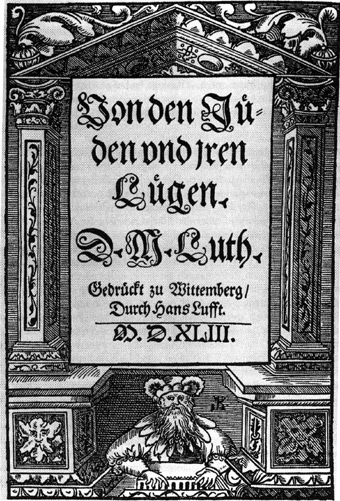 Despite England having recently become a Protestant country, these medieval Catholic views regarding Jews continued to be influential (Nicholas of Lyra's work was very influential on Martin Luther's 1543 polemic On The Jews and Their Lies) indeed it offers historical context to Antonio's response to Shylock's interpretation of the story of Shylock and Laban:
Mark you this Bassanio,I have more than once noted the usage of diabolic rhetoric regarding both Shylock and Jews in general throughout The Merchant of Venice but what is notable here and perhaps chaffing to the 21st century audience is that to Shakespeare's English audiences, the Bible is not a shared text common to both Christian and Jew, but a source of division: at once both holy word in the mouths of Christians and diabolic law in the mouths of Jews and simultaneously affirming both the Christian notion that that same law is superceded by Christianity.
The devil can cite Scripture for his purpose,--
An evil soul producing holy witness
Is like a villain with a smiling cheek,
A goodly apple rotten at the heart.
O what a goodly outside falsehood hath!(Act I, Scene 3, 92-97)
So while I am inclined to view Shakespeare, the author, as a humanist, sensitive to the irony and ambiguity of human experience, the courtroom shenanigans of Portia, like the folkloric and literary sources he relies upon, effectively provide a theological trump to his humanism.